
Buy High Purity Lab Reagents Online: 2026 Buyer’s Guide
Table of Contents
- Why Buying High Purity Lab Reagents Online Requires Due Diligence
- Quick Comparison: High Purity Lab Reagent Suppliers
- Purity Grade Comparison Guide: ACS Grade Chemical Standards and Beyond
- How to Verify Chemical Purity Certificates Before You Buy
- Lab Reagent Storage Requirements and Shelf-Life Management
- Regulatory Compliance and Documentation for Online Reagent Purchases
- Sustainable Lab Practices When Ordering High Purity Reagents
- Frequently Asked Questions
Last Updated: September 14, 2026
Why Buying High Purity Lab Reagents Online Requires Due Diligence
Buying high purity lab reagents online is now routine for most research labs, yet it remains one of the riskiest procurement decisions a principal investigator makes. A reagent that arrives mislabeled, degraded, or without traceable documentation can invalidate months of chromatography or spectroscopy work before anyone notices. This guide from Viva Longevity LLC walks through the verification steps, storage rules, and compliance paperwork that separate a reliable supplier from a costly mistake.
The stakes are higher than most ordering workflows suggest. A single contaminated lot can compromise a titration series, skew trace metal analysis, and force a full experimental repeat. Because online catalogs often look identical across vendors, the real differentiator is not the product photo but the paperwork behind it: certificate of analysis, safety data sheet, and a documented chain of custody.
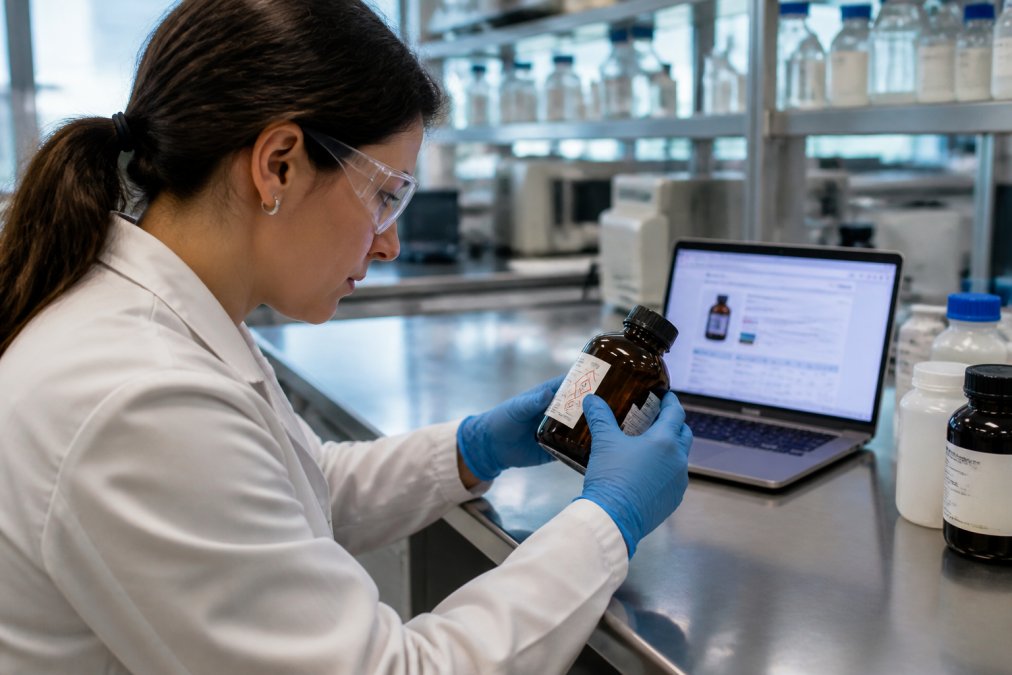
Below, we break down how to compare suppliers, read purity documentation, and store materials so your validation work holds up.
Quick Comparison: High Purity Lab Reagent Suppliers
The table below compares major suppliers on catalog scope, documentation, and best-fit use cases. Pricing is quote-based for most research-grade materials, so request current figures directly.
| Supplier | Catalog Focus | Documentation | Best For |
|---|---|---|---|
| Viva Longevity LLC | Curated research materials | Compliance documentation, 30% order discount | Qualified researchers wanting verified sourcing |
| Sigma-Aldrich | ACS, HPLC, analytical grades | CoA and SDS on request | Professional labs needing broad catalog |
| Thermo Fisher Scientific | Organic and inorganic reagents | Full regulatory documentation | Large institutions, bulk orders |
| Alliance Chemical | ACS reagent grade acids and bases | Standard analytical paperwork | Academic labs needing common reagents |
| Lab Pro Inc. | High-purity solvents and alcohols | Solvent-specific documentation | Cleanroom and solvent-focused workflows |
| MSE Supplies | High-purity inorganic chemicals | Detailed technical specifications | Material science and nanotechnology |
| LabX | Marketplace, new and surplus | Varies by seller | Budget-conscious surplus sourcing |
What the Comparison Table Shows
The table makes one thing clear: catalog size and documentation quality do not always move together. Large manufacturers offer the widest reagent selection, but smaller distributors often provide more focused support for specific applications. A marketplace model can cut costs, yet quality assurance depends entirely on the individual seller, which is a real risk when batch consistency matters.
How to Evaluate a Supplier Before You Order
Beyond the table, use these criteria to separate a reliable supplier from a risky one:
- Documentation turnaround: Can the supplier provide a CoA and SDS for the specific lot before you commit? A supplier who says “available on request” after purchase is a red flag.
- Lot traceability: Ask whether the CoA references the exact lot number you will receive. If the answer is vague, the purity data may not apply to your material.
- Shipping and cold-chain capability: For temperature-sensitive reagents, confirm the supplier ships with appropriate packaging and can provide temperature logs on request.
- Return and replacement policy: A supplier who will not replace a lot that fails your incoming verification is a liability, not a partner.
- Regulatory posture: Confirm the supplier restricts sales to qualified researchers and provides documentation your environmental health and safety team will accept.
For most research labs, the practical choice comes down to how much verification you can do yourself. If your institution has a strong quality control team, a broader catalog works. If you need documentation ready for an audit, prioritize suppliers who provide it upfront.
Before placing a first order with any new supplier, request a sample CoA from a recent lot. How quickly and completely they respond tells you more about their documentation practices than any catalog page.
Purity Grade Comparison Guide: ACS Grade Chemical Standards and Beyond
Purity grades are not interchangeable, and choosing the wrong one wastes budget or ruins an assay. ACS grade chemicals meet the specifications set by the American Chemical Society for analytical work (acs.org). Reagent grade generally meets similar purity thresholds but is not always ACS-verified. HPLC grade solvents are filtered and tested specifically for UV absorbance and gradient elution, making them essential for high-performance liquid chromatography.
ACS Grade vs Reagent Grade vs HPLC Grade
- ACS grade: Meets published ACS specifications; suitable for analytical and general lab use.
- Reagent grade: High purity, often comparable to ACS but without formal ACS certification.
- HPLC grade: Low UV absorbance, filtered for particulates; required for chromatography.
- Technical and industrial grade: Lower purity; not suitable for analytical work.
Selecting the right grade depends on your method. Titration and spectroscopy typically call for ACS grade. HPLC and trace metal analysis demand HPLC grade or better. When in doubt, check the method’s validation requirements before ordering.
How to Verify Chemical Purity Certificates Before You Buy
A certificate of analysis is only useful if you actually read it. A Certificate of Analysis (CoA) is a supplier-issued document listing a lot’s tested properties, including assay percentage, impurities, and analytical method used. Cross-check the lot number on the CoA against the bottle label, and confirm the test methods match your application’s requirements.
Reading a Certificate of Analysis (CoA)
- Verify the lot number matches the container label
- Confirm assay purity meets your method’s threshold
- Check impurity limits, especially for trace metals
- Note the analytical method used (HPLC, titration, spectroscopy)
- Confirm the issue date and storage recommendations
- Cross-reference the accompanying safety data sheet
A CoA without a matching lot number is worthless. If the document references a different batch, the purity data does not apply to your material, and any validation built on it can be challenged.
For guidance on documentation standards, the ACS Committee on Chemical Safety resources outline expectations for reagent labeling and safety data.
Lab Reagent Storage Requirements and Shelf-Life Management
Storage conditions determine whether a reagent is still usable six months after delivery. Most organic solvents belong in a cool, ventilated cabinet away from ignition sources. Hygroscopic reagents need desiccant protection. Light-sensitive compounds require amber glass. Temperature, humidity, and light exposure all accelerate degradation, so a storage log is as important as the original CoA.
Concrete Storage Conditions by Reagent Type
- Volatile organic solvents (acetone, methanol, hexane): Store in a flammable-solvent cabinet at ambient temperature, away from oxidizers. Keep containers tightly sealed to prevent evaporation and moisture ingress.
- Hygroscopic reagents (certain salts, drying agents): Store in a desiccator or under inert gas. Weigh out quickly and reseal immediately; exposure to ambient humidity can degrade purity within hours.
- Light-sensitive compounds (vitamins, certain dyes, silver salts): Use amber glass or wrap containers in foil. Store in a dark cabinet; even brief UV exposure can alter assay values.
- Temperature-sensitive reagents (enzymes, antibodies, certain standards): Follow the supplier’s recommended range, typically 2-8 °C or −20 °C. Avoid repeated freeze-thaw cycles, which degrade activity.
- Acids and bases: Store separately from each other and from organic solvents. Corrosive cabinets with secondary containment prevent damage if a container fails.
Shelf-Life Management in Practice
Shelf life varies widely by reagent and storage condition. A common pattern is that unopened ACS-grade solvents remain within specification for one to three years when stored properly, while hygroscopic salts may degrade in months if exposed to humidity. For reagents with short shelf lives, order smaller quantities more often rather than bulk-buying at a discount.
Track expiration dates and rotate stock so older lots are used first. A common mistake is assuming a sealed bottle is stable indefinitely; many reagents degrade even unopened. When a reagent’s purity is uncertain, re-verify before use rather than risk a failed run.
Degradation Mechanisms to Watch For
- Hydrolysis: Moisture reacts with the reagent, changing its chemical composition. Common in hygroscopic salts and certain esters.
- Oxidation: Oxygen in the headspace reacts with the reagent, especially with aldehydes, phenols, and some metals. Inert gas blanketing can slow this.
- Photodegradation: Light breaks chemical bonds, altering purity. Amber glass and dark storage mitigate this.
- Thermal degradation: Heat accelerates most degradation pathways. Refrigeration slows them but can introduce moisture if containers are opened before reaching room temperature.
Never return a cold reagent container to room temperature with the cap on. Condensation can form inside, introducing moisture that degrades the contents. Let containers equilibrate before opening.
Photograph each incoming lot’s label and CoA together, then store the image with your inventory record. If a supplier or auditor questions a batch later, you have a timestamped record that takes seconds to retrieve.
Regulatory Compliance and Documentation for Online Reagent Purchases
Compliance requirements vary by institution and by state, so no single checklist covers every lab. What matters is that your supplier can provide documentation your legal and environmental health and safety teams will accept. That typically includes a safety data sheet, a CoA, and proof the material was sourced and shipped legally.
Viva Longevity LLC structures every transaction around federal, state, and local compliance, and restricts sales to qualified adults engaged in legitimate research and educational work. That framing matters for procurement teams who have been burned by suppliers whose paperwork did not survive an audit. Before ordering, confirm your institution’s requirements for hazardous materials handling and storage.
The supplier you choose is only half the compliance equation. Your own documentation, storage logs, and disposal records must hold up too.
Sustainable Lab Practices When Ordering High Purity Reagents
Ordering smaller quantities more frequently reduces waste from expired reagents, which is one of the largest sources of lab chemical waste. Consolidate orders where shelf life allows, and choose suppliers who ship in packaging you can recycle or return. Solvent recovery systems can extend the usable life of common solvents, cutting both cost and disposal volume.
Consider whether a slightly lower grade meets your method’s needs before defaulting to the highest purity available. Over-specifying grade is a quiet source of waste. For labs tracking environmental impact, the EPA guidance on laboratory waste management provides a useful framework for reducing hazardous waste streams.
Frequently Asked Questions
What are the different grades of laboratory chemicals?
Laboratory chemicals fall into several grades based on purity and intended use. ACS grade meets the American Chemical Society’s strict purity standards and is suitable for analytical work. Reagent grade is high purity but may not meet every ACS specification. HPLC grade solvents are filtered and tested for UV absorbance, making them ideal for chromatography. Technical and industrial grades serve manufacturing purposes where trace impurities are less critical. Always match the grade to your specific analytical method.
How do I verify the purity of lab reagents before purchasing?
Request a Certificate of Analysis (CoA) from the supplier before ordering. The CoA should list the lot number, test methods used (such as HPLC, GC, or titration), and actual measured purity values. Cross-check the lot number on the bottle label against the CoA. Reputable suppliers provide third-party verification and batch-specific documentation. If a supplier cannot produce a CoA for the specific lot you are buying, treat that as a red flag.
What documentation should accompany high-purity chemical orders?
Every high-purity lab reagent order should include a Certificate of Analysis, a Safety Data Sheet (SDS) compliant with OSHA’s Hazard Communication Standard, and a packing slip with lot numbers. For institutional procurement, you may also need chain-of-custody records and compliance certifications. Verify that the SDS reflects the current OSHA 29 CFR 1910.1200 format. Missing or outdated documentation can delay university legal review and create audit problems later.
What is the difference between ACS grade and reagent grade chemicals?
ACS grade chemicals must meet or exceed the purity specifications published by the American Chemical Society, which include limits on trace metals, residue after ignition, and other impurities. Reagent grade is a broader category that indicates the chemical is suitable for laboratory use but does not guarantee it meets every ACS threshold. For quantitative analytical work, ACS grade is the safer choice. For general synthesis or preparation where slight impurities are tolerable, reagent grade may suffice.
How should high-purity reagents be stored and handled?
Store reagents according to the SDS recommendations, typically in a cool, dry location away from direct sunlight. Hygroscopic chemicals need desiccator storage, and photosensitive compounds require amber glass or foil wrapping. Maintain a temperature log and track expiration dates with a first-in, first-out rotation system. For flammable solvents, follow NFPA 30 storage limits and use approved flammable storage cabinets. Proper storage preserves batch consistency and prevents costly waste.
Choosing a reagent supplier online comes down to documentation you can verify and storage practices you can sustain. Viva Longevity LLC provides curated research materials for qualified adults, with compliance built into every transaction and a 30% discount on orders. If your lab needs a supplier that treats documentation as seriously as you do, log in to Viva Longevity LLC and start sourcing with confidence.
